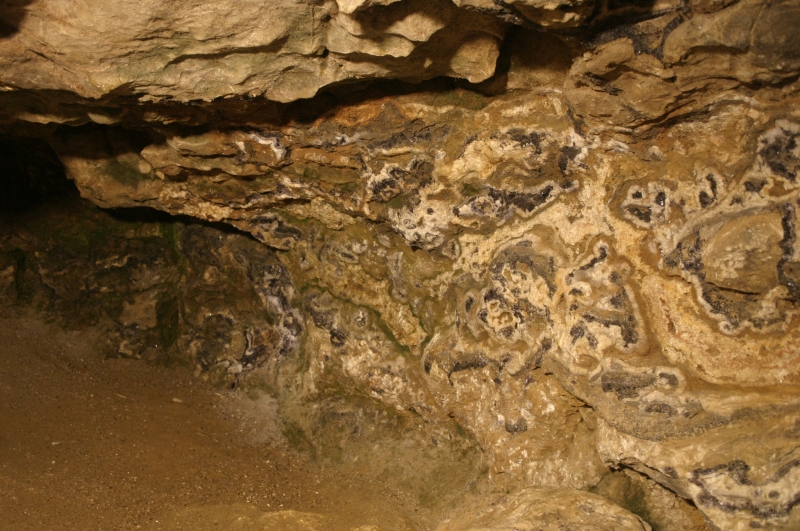
Blue John Cavern is one of four show caves at Castleton in Derbyshire, alongside Peak Cavern, Treak Cliff Cavern and Speedwell Cavern, and it is named after the mineral that is still taken out of it.
Blue John is a banded fluorite, purple and yellow and white in layers, and in the United Kingdom it is found in only two places: this cave and Treak Cliff Cavern next door. That is the whole of the world's supply of the British material. The deposit is around 250 million years old. It is still mined in small quantities outside the tourist season and worked locally into jewellery and ornaments, and the men who cut the remaining seams are the same men who guide the public tours, which is a rare thing in a show cave.
There are eight working seams and they have proper names: Twelve Vein, Old Dining Room, Bull Beef, New Dining Room, Five Vein, Organ Room, New Cavern and Landscape.
The usual explanation for the name is that it comes from the French bleu-jaune, blue-yellow, describing the banding, though other derivations have been proposed and none is settled.
The cavern has one genuine footnote in the history of photography. In 1865 it was the site of the first use of magnesium to light a photograph underground, taken by the Manchester photographer Alfred Brothers. Before that, photographing the inside of a cave was essentially impossible.
The tour goes down a long flight of steps through natural water-worn caverns rather than mined passage, so it is steep, and it stays cool and damp the whole way. Castleton itself is compact enough to see more than one of the four caves in a day.
United Kingdom
See it on the map
Other places on the map within a couple of hours.
